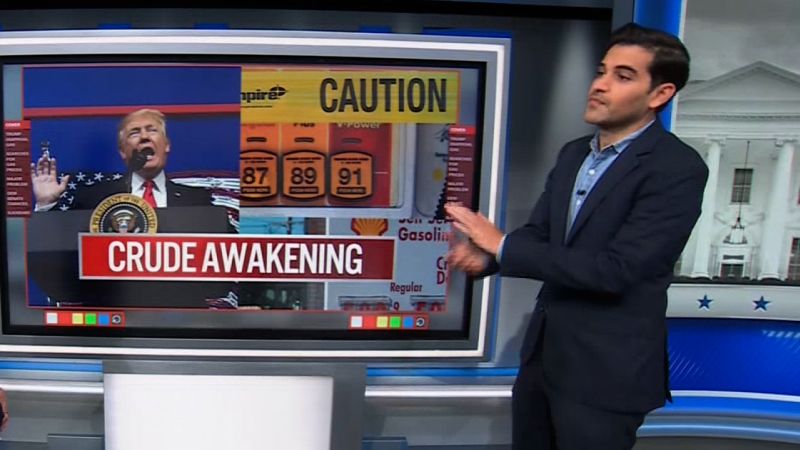
Recent data suggests that American voters are increasingly holding former President Donald Trump accountable for the rising cost of fuel at the pump. In a detailed breakdown provided by CNN News Central, anchor John Berman and Chief Data Analyst Harry Enten revealed that public disapproval regarding gas prices has reached an unprecedented peak. According to current polling, the level of dissatisfaction directed toward Trump over energy costs is the highest ever recorded for any United States president.
The analysis highlights that while inflation affects everyone, certain income brackets are feeling the pinch more acutely than others. The reporting delves into how these specific financial pressures are shaping voter sentiment across different demographics, suggesting that the daily struggle to afford gasoline is becoming a central issue in the minds of the electorate. This economic frustration appears to be translating directly into political volatility as citizens weigh their options ahead of upcoming elections.
These findings come at a critical juncture for the political landscape, with significant implications for the midterm races. Prediction markets are already reacting to this trend, showing a growing expectation that Democrats could seize control of the Senate. As gas prices continue to fluctuate, analysts believe that the perception of leadership failures regarding energy stability may provide the necessary momentum for a shift in legislative power.